

An Architect's Guide to Specifying Glass Balustrades
The use of glass balustrades in modern construction has become a hallmark of sophisticated, light-filled design. From residential staircases to large-scale commercial atriums, these systems provide essential safety without sacrificing aesthetics. However, specifying the correct glass balustrade system is a technical undertaking that requires a deep understanding of materials, regulations, and engineering principles.
As architectural metalwork specialists, we at Glass Tech frequently guide clients, architects, and contractors through this process. This guide is designed to demystify the key considerations, ensuring your project not only looks exceptional but is also safe, durable, and fully compliant.
1. The Foundation: Understanding Safety & Compliance
Before any design choices are made, compliance must be the priority. In the UK, glass balustrades fall under strict regulations to ensure they are safe for purpose.
- Building Regulations - Approved Document K: This document outlines the requirements for protection from falling, collision, and impact. It dictates key dimensions, such as the minimum height of the balustrade (e.g., 900mm for internal stairs, 1100mm for external balconies) and the "sphere rule," which prevents a 100mm sphere from passing through any gaps.
- BS 6180:2011: This is the British Standard and code of practice for barriers in and about buildings. It provides detailed guidance on design, structure, and material choice, including the specific line loads (measured in kN/m) that a balustrade must be able to withstand depending on its location and use (e.g., a domestic balcony vs. a public shopping centre).
- CE/UKCA Marking: As fabricators of structural metalwork, our processes are fully compliant with BS EN 1090, allowing us to apply the legally required UKCA marking to our products. This mark signifies that the product meets all relevant safety and performance standards.
Navigating these regulations is non-negotiable. Partnering with a specialist like HGW Solutions ensures that from the initial design, every aspect of your glass balustrade is specified to be fully compliant.

2. The Material Core: Choosing the Right Glass
The term "glass" covers a range of products, and selecting the correct type is critical for a balustrade's performance
- Toughened (or Tempered) Glass: This is a type of safety glass that has been subjected to a thermal treatment process to increase its strength. It is approximately five times stronger than standard annealed glass. If it breaks, it shatters into small, relatively harmless cubes, reducing the risk of serious injury.
- Laminated Glass: This consists of two or more sheets of glass bonded together with a tough polymer interlayer (typically PVB or SGP). The key advantage is that if one of the glass panels breaks, the interlayer holds the fragments together, keeping the barrier intact. For this reason, laminated glass is often specified for high-level applications or frameless systems where there is no handrail to provide a secondary line of defence.
The thickness of the glass (from 10mm up to 25mm or more) will be determined by the system type, the application, and the required load-bearing capacity as calculated by a structural engineer.
3. The Structure: Systems and Fixings
The method of fixing the glass panels is just as important as the glass itself. This choice will define the final aesthetic and structural approach.
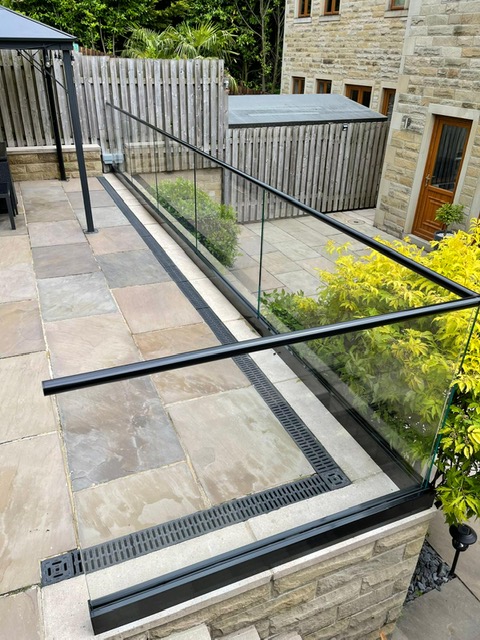
- Frameless Channel Systems: Considered the pinnacle of minimalist design, this system secures the glass panels within a structural aluminium base channel. This creates the illusion of a seamless wall of glass rising from the floor, offering completely uninterrupted views.
- Post Systems: A classic and robust solution, this involves glass panels being clamped between vertical stainless steel posts. It offers immense design flexibility, with options for round or square posts and various clamp styles.
- Bolted Glass & Standoff Systems: Here, the glass is fixed to the side of the building structure or staircase stringer using high-strength stainless steel "standoff" bolts. This creates a striking "floating" appearance and is an excellent space-saving solution for narrower staircases.
When specifying fixings, particularly for external glass balustrades, the grade of stainless steel is crucial. Grade 304 is suitable for most internal applications, but Grade 316 (marine grade) must be used externally and in coastal or high-chlorine environments (like swimming pools) due to its superior corrosion resistance.
4. The Finishing Touch: The Role of the Handrail
A common question is whether a handrail is required. According to BS 6180:2011, a frameless balustrade may not require a handrail if it is constructed from toughened laminated glass that is proven to provide adequate containment even after a panel breaks.
However, in many cases, a handrail is either required or desired. It provides an extra layer of perceived safety and can be a key design feature. Slender, slotted stainless steel handrails can cap the top of the glass for a neat finish, while offset timber or metal handrails can add a contrasting texture and a warmer touchpoint.
The Glass Tech Process: From Concept to Completion
At HGW Solutions, we provide a complete, end-to-end service. Our in-house team uses the latest 3D modelling and CAD software to design your glass balustrade system, allowing you to visualise the final result and ensuring a perfect fit. Once approved, our expert fabricators create the components in our workshop before our specialist installation team ensures a precise, secure, and compliant final installation on-site.
Choosing a glass balustrade is a significant investment. By understanding these key technical considerations, you can make informed decisions and ensure you specify a system that is as safe and robust as it is beautiful.

Ready to Plan your Glass Balustrades?
To discuss the technical requirements for your next project, contact the experts at Glass Tech today.
Get in touch about Glass Balustrades
or see more Glass Balustrades...
Glass Tech
Online Reviews & Testimonials
Check out our own excellent reviews...
Glass Supply & Installation Specialists
A professional team of experts providing glass and glazing solutions covering the whole of Yorkshire & more...
Whether it's Birmingham, Hull, Liverpool, Machester, Newcastle or Nottingham, get in touch to find out how we can help you with your bespoke glass project.